The Viral Quote That Sparked a Political Firestorm: Why Celebrity Voices Continue to Shape America’s Divided Conversation
In today’s fast-moving digital world, a single sentence can travel across millions of screens within hours. A quote, a headline, or a short video clip can ignite debate, fuel outrage, and become part of a larger political conversation before anyone has taken the time to examine where it came from.
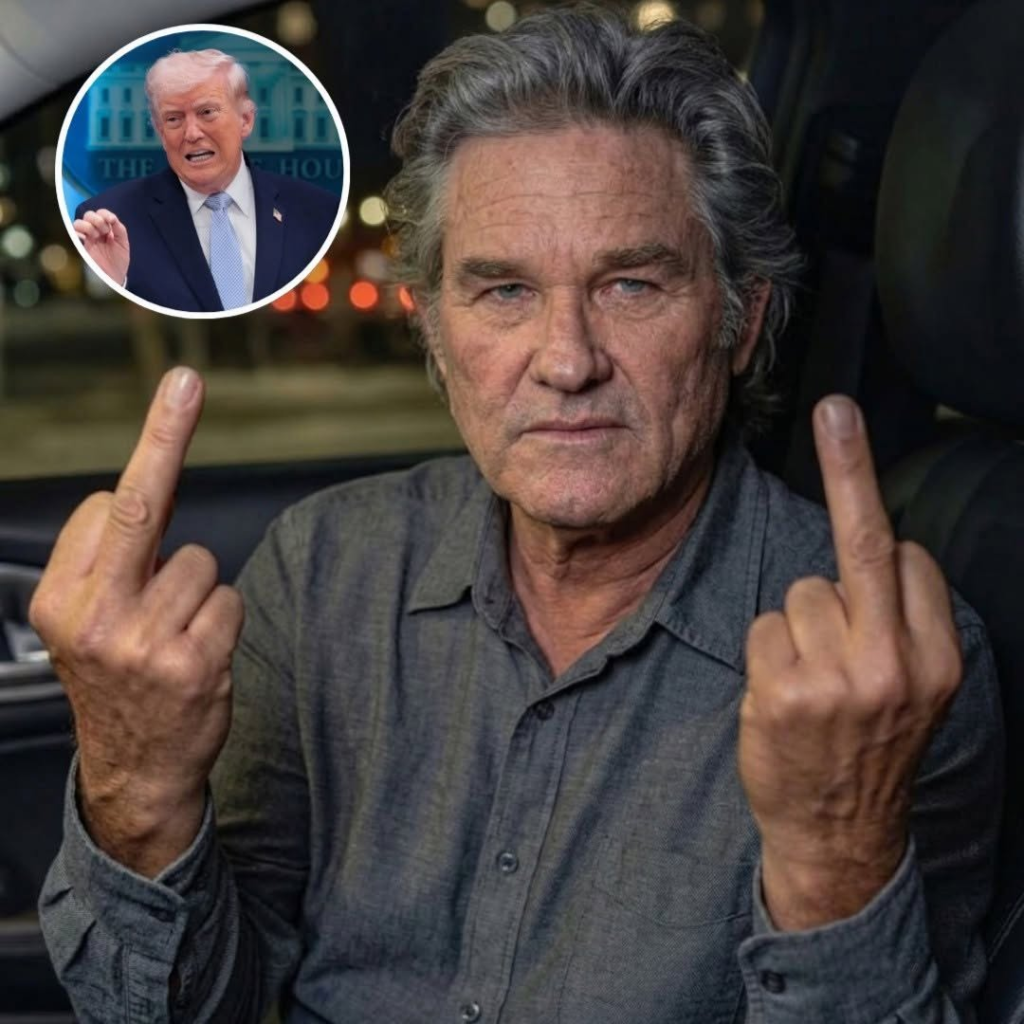
Recently, a message circulating online claimed that actor Kurt Russell had delivered a harsh political criticism aimed at supporters of Donald Trump. The alleged statement quickly spread among social media users, with some people sharing it as a powerful warning and others questioning whether the quote was authentic.
Regardless of its origin, the reaction revealed something important about modern America: political conversations are no longer limited to politicians, debates, and government buildings. Celebrities, athletes, entertainers, and public figures have become part of a larger cultural battlefield where opinions can influence millions.
But why do celebrity statements — real or fictional — create such intense reactions?
The answer lies in the unique relationship between fame, trust, and politics.
Why Celebrity Political Messages Capture Attention

For decades, Americans have watched famous actors and entertainers become involved in social and political issues.
Some celebrities use their platforms to support causes they believe in. Others avoid politics entirely, preferring to focus on their professional work.
But when a well-known figure is connected to a political message, people often pay attention because celebrities already have a relationship with their audiences.
Fans feel like they know them.
They have watched their movies.
They have followed their careers.
They have built emotional connections with their public image.
Because of this, a political statement attributed to a famous person can carry a different emotional weight than a statement from an unknown individual.
Supporters may feel inspired.
Critics may feel frustrated.
And the conversation quickly becomes bigger than the original message.
The Power and Danger of Viral Quotes
The internet has transformed how information spreads.
In previous generations, a newspaper editor or television network often decided what information reached the public.
Today, anyone can create a post that reaches thousands or even millions of people.
This has created incredible opportunities for discussion.
But it has also created challenges.
False quotes, altered images, and misleading headlines can spread quickly because people often react emotionally before checking the source.
A powerful message that matches someone’s beliefs is more likely to be shared immediately.
This happens across the political spectrum.
People of every ideology can encounter information that confirms what they already believe.
That is why verifying sources has become increasingly important.
A famous name attached to a quote does not automatically mean the person actually said it.
Why Political Division Feels Stronger Than Ever
The United States has experienced political disagreements throughout its history.
Debates over leadership, policies, and national direction are nothing new.
However, modern technology has changed the speed and intensity of those disagreements.
Social media platforms reward content that creates strong emotions.
Anger spreads quickly.
Shock spreads quickly.
Controversy spreads quickly.
A calm discussion often receives less attention than a dramatic statement.
As a result, political conversations can become more emotional and less focused on understanding different perspectives.
A single viral post can become a symbol of a larger argument about the future of the country.
Celebrity Influence in Modern Politics
The relationship between Hollywood and politics has existed for generations.
Actors have supported presidential campaigns.
Musicians have used concerts to promote causes.
Athletes have spoken about social issues.
Some people believe celebrities have an important role because they have large platforms and the ability to bring attention to important topics.
Others argue that fame does not necessarily equal expertise.
Both perspectives continue to shape the debate over celebrity involvement in politics.
For supporters, celebrities are citizens with the same right to express opinions as anyone else.
For critics, celebrity opinions can sometimes receive more attention than those of experts or community leaders.
The debate remains ongoing.
The Emotional Side of Political Storytelling
One reason political content becomes viral is because it often tells a story.
People connect with stories more easily than statistics.
A statement about fear, disappointment, hope, or anger can feel personal.
Political messages often succeed online because they transform complicated issues into simple emotional narratives.
A person may not share a detailed policy analysis.
But they may share a message that expresses how they feel.
This is why emotional language has become such a powerful tool in modern political communication.
The Importance of Looking Beyond the Headline
In an era where information moves faster than ever, the first version of a story is not always the complete story.
A headline may leave out important context.
A short quote may remove surrounding details.
A viral post may not explain where the information originated.
Taking a moment to ask questions can lead to better understanding.
Who originally published this?
Is there a direct recording or interview?
Was the statement reported by reliable sources?
Does the evidence support the claim?
These simple questions can help people make more informed decisions.
A Changing Relationship Between Fame and Trust
The entertainment industry has always relied on public connection.
Actors become beloved because audiences feel emotionally connected to their performances.
But that connection can also create complicated expectations.
Some fans want celebrities to speak about issues they care about.
Others prefer entertainers to remain separate from politics.
This tension reflects a larger question:
Should public figures use their influence beyond entertainment?
There is no universal answer.
Different people will continue to see the issue differently.
Why Political Conversations Need More Than Anger
A healthy democracy depends on disagreement.
People will always have different opinions about leaders, policies, and the direction of society.
The challenge is finding ways to discuss those differences without losing respect.
Strong emotions are understandable.
People care deeply about their country and their communities.
But meaningful conversations require more than outrage.
They require listening.
They require evidence.
They require the willingness to consider information from multiple perspectives.
The Bigger Lesson Behind Viral Political Stories
Whether a viral political quote is celebrated, criticized, or questioned, the reaction often reveals something about society itself.
It shows what people fear.
What they hope for.
What they believe needs to change.
In many ways, the story surrounding a quote can become just as important as the quote itself.
The internet has given everyone a voice.
But with that power comes responsibility.
Sharing information is not only about expressing an opinion.
It is also about understanding what is true.
Conclusion: The Conversation Continues
The viral message connected to Kurt Russell became part of a much larger conversation about politics, celebrities, and trust in the digital age.
Whether people agree with the ideas being discussed or strongly disagree, the reaction demonstrates how powerful public conversations have become.
Today, a single post can reach millions.
A single sentence can influence opinions.
And a single story can reveal the deep emotions shaping a nation.
In the end, the most important question is not only what someone says.
It is whether we take the time to understand the truth behind the words.