When Service, Patriotism, and Politics Collide: The Debate Over Who Has the Right to Speak for America
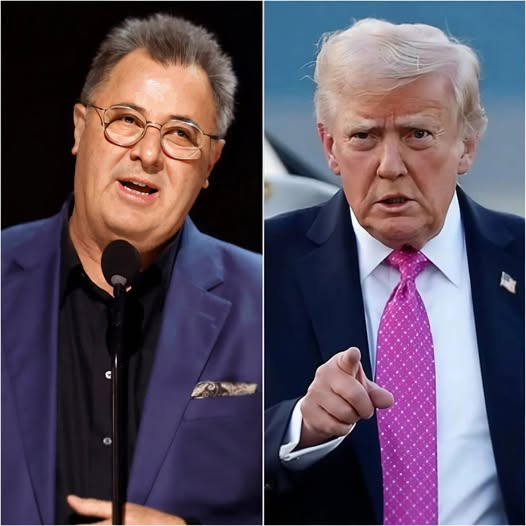
In American history, few subjects carry as much emotional weight as military service, patriotism, and the meaning of sacrifice. For generations, questions about who has served, who has sacrificed, and who has earned the right to speak about duty have remained at the center of national conversations. These discussions often become especially intense when they enter the world of politics, where personal histories, family traditions, and public responsibilities collide.
A recent political controversy involving musician Vince Gill and former President Donald Trump has sparked a broader debate about what patriotism truly means and whether service to the country should influence whose voice carries the most weight in national discussions.
At the center of the debate is not only a disagreement between two public figures. It is a much larger question that Americans have wrestled with for decades:
Is patriotism measured by military service alone, by words, by actions, or by a lifetime of commitment to the country?
For some Americans, wearing a uniform represents the highest form of public service. It symbolizes sacrifice, discipline, and a willingness to place national duty above personal comfort. For others, patriotism can take many forms — from military service to public leadership, community involvement, protecting constitutional principles, or contributing to society in different ways.
The clash between these perspectives reveals one of the deepest disagreements in modern American culture: what it means to truly serve.
For many people, military service is not simply a career choice. It is a family tradition passed down through generations. It represents stories told around dinner tables, memories of loved ones who served overseas, and sacrifices that often remain invisible to the public.
Families with long histories of service frequently view that tradition as something sacred.
They remember grandparents who wore uniforms during times of war.
They remember parents who spent years protecting others.

They remember relatives who returned home changed by experiences most people never witnessed.
For these families, service becomes part of their identity.
It becomes more than a job.
It becomes a responsibility carried from one generation to another.
This is why debates involving military service often become deeply personal. When someone questions another person’s patriotism, they are not simply criticizing a political position. They may be challenging a person’s family history, personal sacrifices, and sense of identity.
That is what makes these conversations so emotionally powerful.
Vince Gill’s public image has long been associated with music, creativity, and his connection with American culture. Like many artists, he has used his platform over the years to express opinions about issues he believes are important.
When entertainers enter political debates, reactions are often divided.
Supporters argue that artists are citizens too and have every right to participate in public conversations.
Critics argue that fame does not automatically create political authority.
This tension has existed for generations.
From musicians speaking about war and civil rights to actors discussing elections and social issues, American entertainers have often played a role in shaping public conversations.
The question is not whether celebrities should have opinions.
The question is why those opinions sometimes create such intense reactions.
The answer often lies in influence.
Millions of people listen to artists they admire. Their words can reach audiences far beyond traditional political channels. Supporters see that as an opportunity to raise awareness. Opponents sometimes see it as unwanted influence.
Donald Trump, meanwhile, has built much of his political identity around challenging traditional institutions and presenting himself as a leader willing to confront critics directly.
Throughout his career, Trump has frequently been involved in debates about leadership, loyalty, and what it means to put America first. His supporters often describe him as someone willing to challenge powerful groups and defend policies they believe represent ordinary Americans.
His critics argue that his style has intensified political divisions and created conflicts that extend beyond policy disagreements.
This divide is central to understanding why controversies involving Trump often become larger than the original issue.
Supporters and opponents frequently view the same event through completely different perspectives.
One side may see strength.
The other may see unnecessary confrontation.
One side may see defense of national values.
The other may see an attack on democratic debate.
The argument surrounding military service highlights an important reality about American society: patriotism does not have a single definition.
For some, patriotism means serving in uniform.
For others, it means voting, volunteering, protecting communities, creating businesses, teaching children, or contributing to the country through everyday actions.
The United States has always been shaped by many forms of service.
Soldiers protect the nation’s security.
Teachers shape future generations.
Doctors care for communities.
First responders run toward danger.
Workers build and maintain the systems society depends on.
Each form of contribution plays a role.
The challenge begins when one form of service is presented as the only legitimate measure of loyalty.
Military service is deeply respected because it often requires extraordinary sacrifice. Service members may spend years away from their families. They may face physical danger and emotional challenges. Their commitment deserves recognition.
At the same time, American history also shows that citizenship involves many responsibilities beyond military service.
A person does not have to wear a uniform to care about their country.
A person does not have to come from a military family to value national ideals.
The strength of a democracy comes from allowing citizens with different experiences to participate in public debate.
The controversy also raises another important question:
Should personal history determine whether someone’s political opinions are considered valid?
Some argue that people with direct experience in an area deserve special attention. A veteran discussing military policy, for example, may bring knowledge that others do not have.
Others argue that citizenship itself gives people the right to participate in discussions about national issues.
Both arguments exist in American political culture.
Experience matters.
But so does the principle that every citizen has a voice.
What makes political debates so difficult today is that they often move quickly from disagreements about ideas into arguments about character.
Instead of asking:
“What policy is best?”
People often ask:
“What kind of person supports this policy?”
That shift can make compromise more difficult.
A disagreement about government decisions becomes a debate about loyalty.
A disagreement about leadership becomes a debate about patriotism.
A disagreement about national priorities becomes a personal conflict.
This pattern has appeared throughout American history, but modern technology has accelerated it. Social media allows moments of conflict to spread instantly, often reaching millions of people before full context is available.
A single statement can become a national argument within hours.
The deeper lesson from these controversies is that patriotism is a complicated and deeply personal idea.
For some Americans, it is represented by a uniform.
For others, it is represented by a lifetime of civic involvement.
For many, it is a combination of both.
The challenge for a divided country is finding a way to recognize different forms of dedication without dismissing the sacrifices of others.
Respect does not require agreement.
Listening does not require surrendering beliefs.